Crypto for beginners, a step-by-step framework for buying, holding and managing risk
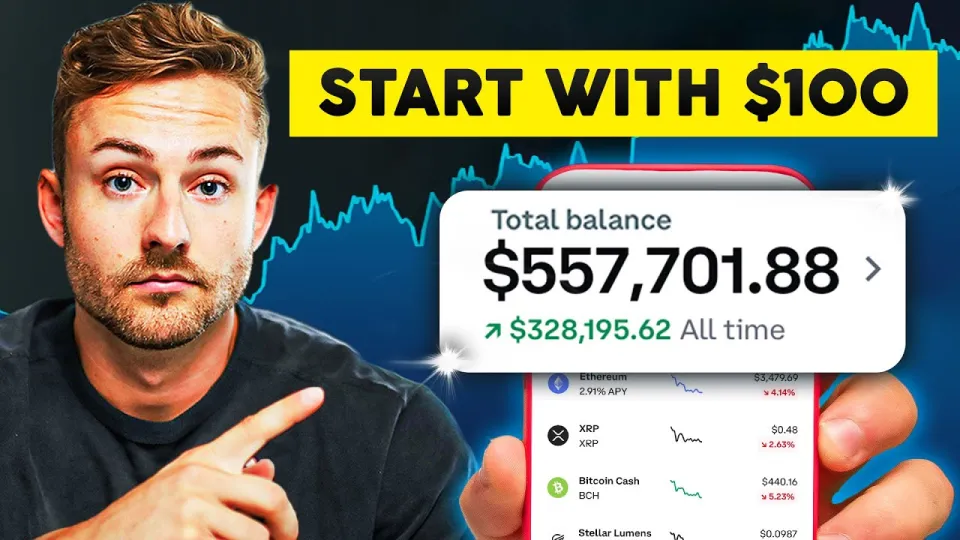
Video: How To Invest in Crypto as A COMPLETE Beginner [2025 GUIDE]
Want articles like this for your own video to promote it on YouTube and Google? Order them through the Telegram bot @sat_sit_bot. Articles with your video embedded are written and posted by the bot itself — on popular topical sites (no ads). Free trial — 50 articles.
· based on the channel Craig Percoco
Key takeaways
- Start with Bitcoin and Ethereum, not low-cap altcoins: they carry the deepest liquidity and the longest track record.
- Cap crypto at 1–5% of your net worth and only use money you can lose entirely without changing your life.
- Buy on a regulated exchange with low fees (Coinbase, Bybit, Kraken), then move long-term holdings to self-custody.
- Spot buying has no liquidation risk; leverage and futures can wipe an account even when the long-term thesis is right.
- Keep a written trade journal and a fixed position size — the recurring failures beginners report are discipline and risk management, not bad coin picks.
Crypto investing for a complete beginner means buying a small, fixed share of Bitcoin and Ethereum on a regulated exchange with money you can afford to lose, storing the long-term portion in your own wallet, and ignoring everything else until you understand how fees, custody and volatility actually work. You do not need leverage, altcoin picks or a paid signal group to start — you need an account, a plan and a position size that cannot hurt you. Craig Percoco's beginner walkthrough is a useful map of that path, and the free trading fundamentals course he links (start learning trading for free) covers the charting basics most new buyers skip.
What crypto actually is and why beginners keep losing money
Crypto is a market of digital assets settled on public blockchains, and its defining feature for a beginner is not the upside — it is the volatility and the absence of a safety net. Bitcoin, launched in 2009, is the largest asset by market capitalization; Ethereum introduced programmable smart contracts and now hosts most of the tokens, DeFi protocols and stablecoins people trade. Everything else — thousands of altcoins — trades against those two in liquidity and credibility.
Three structural facts explain most beginner losses:
- Volatility cuts both ways. Drawdowns of 50–80% inside a single cycle are normal for large caps and routine for small caps. A position sized as if it were a savings account gets sold at the bottom.
- Leverage is sold as a shortcut. Futures with 10x–100x leverage can liquidate an account on a 1–10% move against you. The long-term thesis can be entirely correct and you still end up with zero.
- Custody is your responsibility. Exchange failures and lost seed phrases have destroyed more retail money than bad charts. "Not your keys, not your coins" is a cliché because it keeps happening.
The four fundamentals to check before buying any coin
Fundamentals in crypto are a filter, not a guarantee: they tell you whether an asset has real usage and survivable economics before you hand over money. Apply them in this order.
- Use case and demand. Does the network do something people pay for — settlement, lending, storage, compute? A token with no fee revenue and no users is a narrative, not a business.
- Tokenomics. Check total supply, circulating supply, emission schedule and unlocks. A coin with 20% of supply circulating and a large unlock in three months faces constant sell pressure from insiders.
- Team and funding. Public, identifiable developers, audited code, and a treasury that is not one whale's wallet. Anonymous teams can ship great products, but they can also disappear.
- Liquidity. Daily volume on major exchanges and depth in the order book. Thin liquidity means wide spreads, slippage on exits, and prices that can be pushed around by one seller.
For a first portfolio, the filter is simple: Bitcoin and Ethereum pass all four by default. Everything else has to earn its place.
A step-by-step plan to make your first crypto purchase
A first purchase should take an afternoon and be boring: the goal is a small, correctly stored position, not a perfect entry. Work through these steps in order.
- Fix the budget first. Decide on an amount that is 1–5% of your net worth and that you would not miss if it went to zero. Write the number down before you open an exchange.
- Pick a regulated venue. Coinbase, Kraken and Bybit are common choices; compare maker/taker fees, deposit methods and withdrawal limits. Complete identity verification (KYC) — it is mandatory at any legitimate exchange.
- Fund with a bank transfer, not a credit card. Card purchases carry 3–5% fees and, worse, they turn a speculative position into debt.
- Buy in tranches. Split the budget into 3–6 equal buys over weeks or months (dollar-cost averaging) instead of one all-in order at a random price.
- Move long-term holdings to self-custody. A hardware wallet with a seed phrase written on paper and stored offline. Test with a small withdrawal first.
- Record everything. Date, asset, price, fee, and the reason for the buy. This log is what turns experience into skill.
Spot versus futures, and how people actually make money in crypto
There are only a few honest ways to make money in crypto, and most of them are slow: buy and hold through cycles, dollar-cost average into large caps, or trade a tested system with strict risk limits. Speculative trading can work, but it is a skill business with a long learning curve, not a shortcut around one.
- Holding (spot). Buy BTC or ETH, store it, and accept multi-year drawdowns. No liquidation risk, minimal time commitment, tax events only when you sell.
- Dollar-cost averaging. Fixed amounts at fixed intervals. It removes timing decisions and smooths entry price.
- Active trading. Requires backtesting, a written rule set, position sizing (commonly risking 1–2% of the account per trade) and a journal. Most beginners underestimate the hours involved.
- Yield and staking. Returns come with smart-contract, counterparty and lock-up risk; a double-digit APY is compensation for risk, not free money.
What does not work: copying signals, chasing pumps, and sizing up after a loss. Traders who survive their first cycle almost always cite the same list of failures — no system, no patience, no discipline, no backtesting, no journal, poor psychology and poor risk management — and fix them one at a time.
Common beginner questions and hard answers
Beginners tend to ask the same handful of questions, and the honest answers are less exciting than the marketing. A few recurring themes from the comment sections under beginner crypto videos are worth addressing directly.
"Do I need a mentor or a paid group?" A mentor shortens the learning curve, but no course replaces screen time and a journal. Free structured material first; pay only when you know exactly what gap you are filling. Be sceptical of anyone showing account balances as proof.
"How much can I realistically make?" Nobody can promise a return. Screenshots of accounts turning $10,000 into six figures are unverifiable and usually omit the losing accounts behind them. Model your plan on a range of outcomes, including a total loss of the crypto allocation.
"Is it too late to start?" Bitcoin has been declared dead hundreds of times across multiple 70%+ drawdowns. The relevant question is not timing but sizing: a small, rules-based position survives being early or late.
"Why do I keep getting stopped out or liquidated?" Usually position size and leverage, not analysis. Cut size, drop leverage to zero while learning, and only add risk after a documented run of disciplined trades.
Useful links
- Free trading fundamentals course: https://bit.ly/3VHSOeT
- Crypto trading course and private team: https://bit.ly/3xhn47c
- Discord community access: https://bit.ly/3VmrO3r
- Full resource list: https://bit.ly/3zeM13u
- TradingView charting: https://bit.ly/3Xf9uvz
- Bybit exchange: https://partner.bybit.com/b/fortraders
Bottom line
Crypto rewards patience and position sizing far more than it rewards clever picks, and a beginner's first job is to survive long enough to learn. Buy a small amount of Bitcoin and Ethereum on a regulated exchange, store it yourself, keep a journal, and leave leverage alone until you have a tested process. Craig Percoco's guide is a solid starting structure for that process, and the free course behind this link is the cheapest way to test whether the trading side interests you before paying for anything. Treat every figure you see on social media as marketing until your own records say otherwise.
Source: How To Invest in Crypto as A COMPLETE Beginner [2025 GUIDE] · Markdown version
Questions & answers
How much money do I need to start investing in crypto?
There is no minimum at most exchanges — you can buy $10 of Bitcoin. What matters is that the amount is 1–5% of your net worth and money you could lose entirely without changing your plans. Starting small and adding through dollar-cost averaging is safer than a single large first buy.
Should I buy Bitcoin or altcoins as a beginner?
Start with Bitcoin and Ethereum, which have the deepest liquidity and the longest track record. Altcoins can outperform in a bull market but also fall 80–90% and often never recover. If you want exposure to smaller tokens, cap it at a small fraction of an already small crypto allocation.
Do I need a hardware wallet?
For anything beyond a small trading balance, yes. Exchange balances are claims on a company, not coins you control, and exchange failures have wiped out customer funds before. A hardware wallet plus an offline backup of the seed phrase removes that counterparty risk.
Is crypto trading a realistic way to replace a salary?
Rarely in the first years. Trading is a skill business with a long, expensive learning curve, and most beginners lose money before they break even. Treat it as a small, separate risk budget while your income comes from elsewhere, and judge yourself on process and risk control rather than monthly profit.